Scope agent access to the task, not the user
A live demo of runtime auth for AI agents: watch the same on-call agent run with admin keys, then with access scoped to each task.

Thu, Dec 10 · 11am PT / 2pm ET
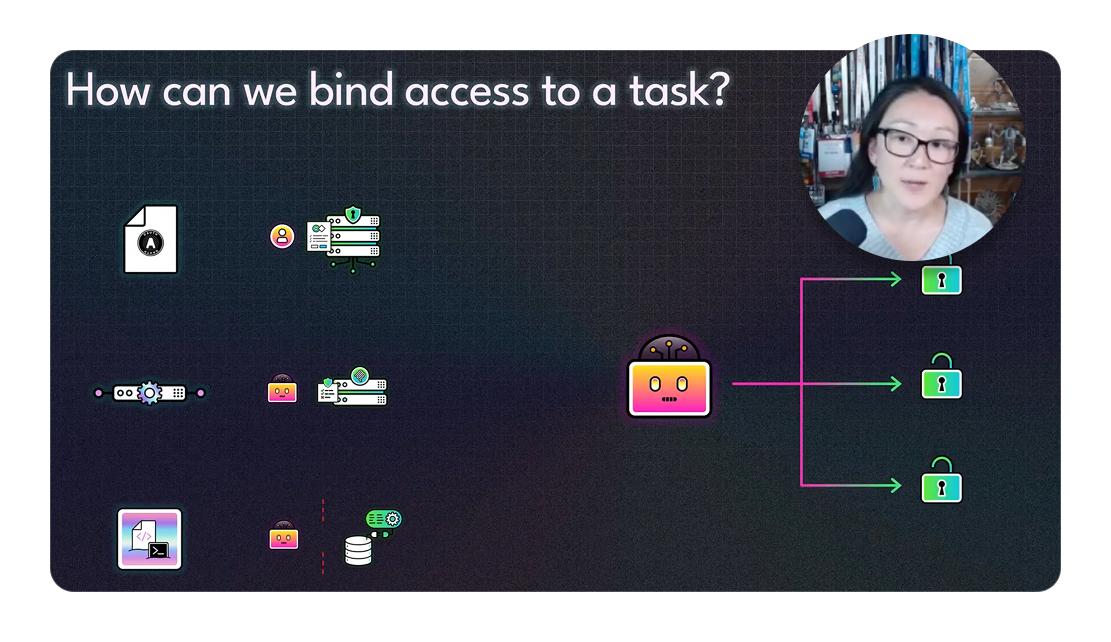
When an AI agent acts for an engineer, it often uses long-lived, static credentials that grant overprivileged access to critical services, from GitHub to production databases. In this live session, Kim Maida runs the same on-call agent twice: first using standing admin credentials, where it exposes sensitive data, drops a database, and restarts production. After implementing runtime auth and task-based policy, each action gets a short-lived credential scoped to its task and the person the agent is acting for.
You'll see which actions get blocked, which succeed, the role human-in-the-loop plays, and why someone clicking an approve button isn't enough to reliably control access. Then Kim walks through how Keycard enforces runtime policy, credential issuance, and the audit trail that proves who did what, when. She'll cover the dangers of static credentials, the open standards that make runtime auth possible, policies that use human and agent identities, and more.
This webinar is for security engineers, architects, and platform teams putting agents into production.
What you'll learn
- What goes wrong when agents run on long-lived keys and standing admin access
- Why a human approval step can't stop an agent on its own
- How OAuth token exchange gives every agent action a short-lived credential scoped to its task and the person it acts for
- How Keycard enforces policy at runtime, and what the audit trail shows your security team
